The pill bottle cap that will not stop until you open the bottle.
No phone. No app. Nothing to learn.
PillPuck is a coin-sized reminder that sticks to the cap you already have. At dose time it alarms, and it keeps alarming until the bottle is physically opened. Then it writes the time down. Built by a patient who kept forgetting his own blood pressure pills.
Get in touch See how it works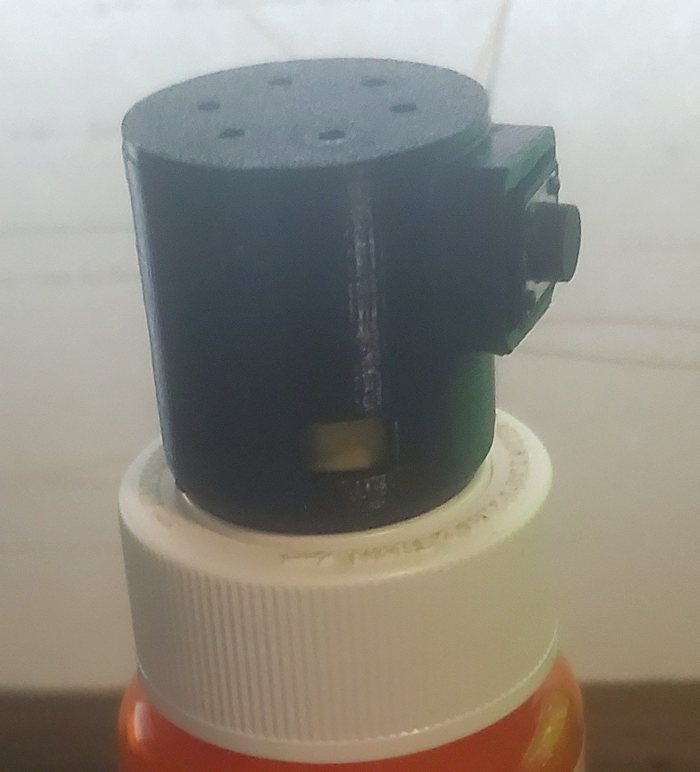
How it works
It sticks to the cap you already have
A coin-sized unit on the pharmacy bottle. No new container, no loading, no charging routine. A coin cell runs it for months.
At dose time it alarms, and keeps alarming
The alarm escalates in pattern and loudness. There is no button, no app command and no phone that can silence it.
It stops only when the bottle opens
Its own motion sensor detects the opening and writes the time to a log on the device. That log is the record of the dose.
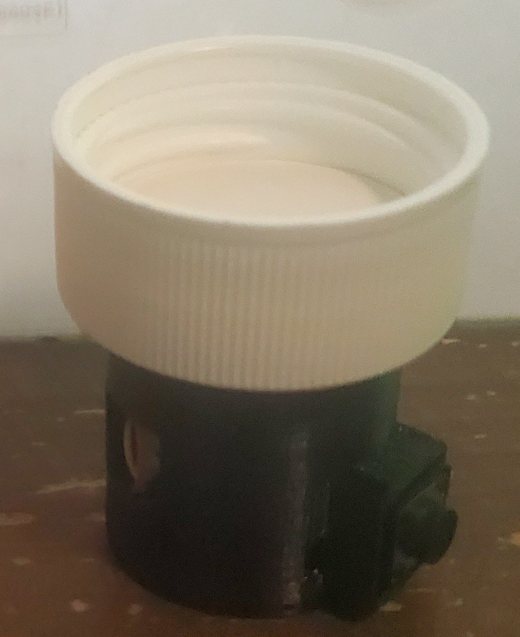
The one design decision. Every reminder on the market can be dismissed without the pill moving. A swipe, a button, a light that goes out on its own. PillPuck has no dismiss path at all. Not hidden, not password protected. Absent. The alarm ends when the bottle opens and at no other time.
Who it is for
The person who forgets, not refuses
Once-daily medication is the common case after fifty. Most people who miss a dose know exactly what the pill is for. They were somewhere else at nine o'clock. PillPuck comes and finds them.
The family
An adult child can read the puck's log on a phone over Bluetooth, with no account and no cloud. The bottle was opened at 9:01, or it was not. That answers the daily question without a phone call.
Researchers and adherence programs
Pharmacy refill records cannot tell whether last Tuesday's dose was taken. PillPuck records each opening on the device itself, which gives a study team or a care program a per-dose record instead of a monthly guess.
What we know so far, stated exactly
5 of 5
doses taken in the first instrumented week, August 26 to 30, 2026, against the founder's self-logged baseline of about two days in seven. Response times 34 to 567 seconds, median 106.
90 days
A real-world run on a sealed unit began September 9, 2026, on the founder's own bottle, with every alarm and opening logged on the device.
n = 1
That is one person, unblinded, and the person is the inventor. It is a reason to test, not a result. The next step is ten units in ten other households.
Where it stands. A provisional patent application was filed in August 2026. An NIH small business research application is being prepared for January 2027, and NIH program staff have confirmed in writing that the topic fits their priorities. The device is not for sale yet. The phone companion that reads the log is live at alrightyadrian.github.io/pillpuck-companion, with a demo mode that needs no hardware.
Contact

Adrian Alcaraz, founder
Premier Contracting Services, LLC
Glendora, California
adrian@pcsfederal.com
562-445-5924
Looking for
Research partners for the January 2027 NIH application. Adherence programs and health plans interested in a pilot. Households willing to try one of the first ten units. Write and say which.